You Are Not a Function: Consciousness, Brain, and Free Will in the Quantum World
The third article of the series. The Orch OR hypothesis, microtubules, the mystery of anesthesia, the Bayesian paradox of self-optimization — and five practices for returning to yourself.
Three Portraits
First. The Financier on Adderall.
He is thirty-two. He wakes at 5:40 to the signal of his Oura ring, checks Whoop, sees a recovery of 78%, decides on the dose. For breakfast — a nootropic bar, coffee with MCT oil. Methylphenidate at eight; by ten he is in the flow: opening positions, reading reports, writing scripts. By two in the afternoon — a crash, another dose. By seven — agitation, a slight tremor, propranolol to hide it. Whoop in the evening will tell him his strain was 17.4. He will write it in a spreadsheet. In a year he will have 365 rows and the feeling that he has not lived a single day.
I did not invent this person. I have met him. Maybe in a different body, in a different city, but in the same rhythm. And what frightens me about him is not the pill. The pill is just chemistry. What frightens me is the spreadsheet. The spreadsheet that has no row for "life."
Second. The Biohacker with a Continuous Glucose Monitor.
She is twenty-eight. On the back of her hand — a Freestyle Libre sensor. She knows her glucose response to 37 foods. For each one she knows what to do: a walk after rice, cinnamon after coffee, magnesium before bed. She has a spreadsheet in which her body is represented as 47 parameters. Her mood is a function of these parameters. When she has a bad day, she asks: which parameter dropped? She finds the answer. She fixes it. And she does not remember the last time she was simply sad for no reason.
Third. The Manager on Beta-Blockers.
He is forty-five. Propranolol before every meeting with the Board. Gabapentin in the evening to switch off the anxiety. The sleep tracker says his REM phase is too short. He adds glycine. Three years later he cannot go to the shop without a pill. His body has forgotten how to handle its own adrenaline. This is an excellent example of how the optimization of one parameter — stability — destroys the system's ability to adapt.
What Do They Have in Common?
They are people-functions, having turned themselves into a set of curves on a dashboard. Every parameter optimized, every peak smoothed, every valley filled. From the standpoint of classical utilitarian ethics they have reached the maximum: maximum productivity, minimum suffering.
But they have become insensitive to what they optimized. And this is the main threat to the modern human being.
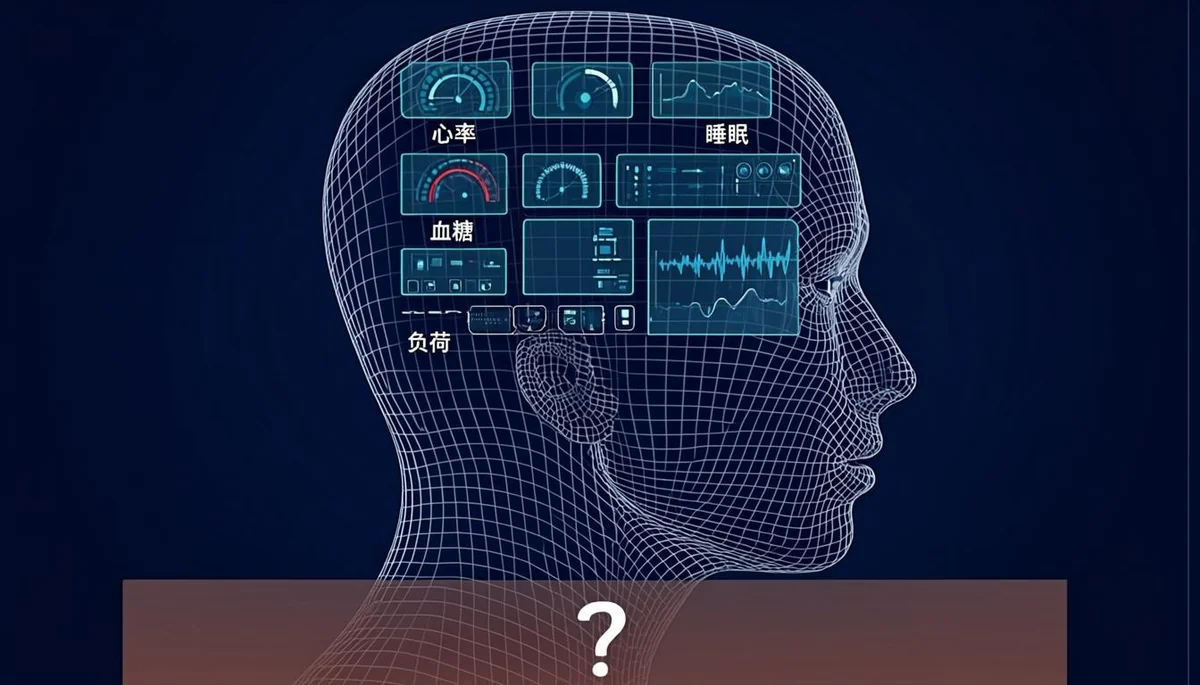
Fig. 1. Person-as-function. All parameters measured, all curves smoothed. Only the row "life" is empty.
I. Why Can't Neuroscience Explain Consciousness?
The standard neuroscience textbook teaches that consciousness is born from synaptic connections between neurons. But there is a problem: nerve impulses propagate too slowly — up to a hundred meters per second. Light passes through the brain in fractions of a nanosecond, while a nerve signal takes milliseconds.
How does the brain manage to combine information from different areas into a single, unified experience in fractions of a second?
Classical neuroscience has no answer.
In 1989–1993 Wolf Singer discovered that when a cat (and later a human) perceives a coherent object, neurons in different areas of the brain begin to oscillate synchronously at a frequency of about 40 hertz. Gamma synchronization is a physical marker of a unified conscious experience. The classical model explains this with difficulty: synapses simply do not have time to "agree" within such a short period.
Consciousness remains what the philosopher David Chalmers called the "hard problem": why are physical processes accompanied by subjective experience? Why is there qualia at all — the sensation of red, the taste of coffee, pain?
II. The Penrose-Hameroff Hypothesis: The Brain as a Quantum Receiver
The Meeting
Roger Penrose — a mathematician who, using Gödel's incompleteness theorem, showed the fundamental impossibility of fully algorithmic modeling of human consciousness. Stuart Hameroff — an anesthesiologist who could not explain why some drugs switch off consciousness without blocking ordinary neural impulses.
Their meeting produced one of the boldest hypotheses in the science of consciousness — Orchestrated Objective Reduction (Orch OR).
Microtubules
Penrose and Hameroff propose a candidate for the substrate of consciousness — microtubules. These are hollow cylinders of the protein tubulin that form the cytoskeleton of every cell, including neurons. A single neuron contains millions of them. Unlike synapses, they are theoretically capable of supporting processes at the quantum level.
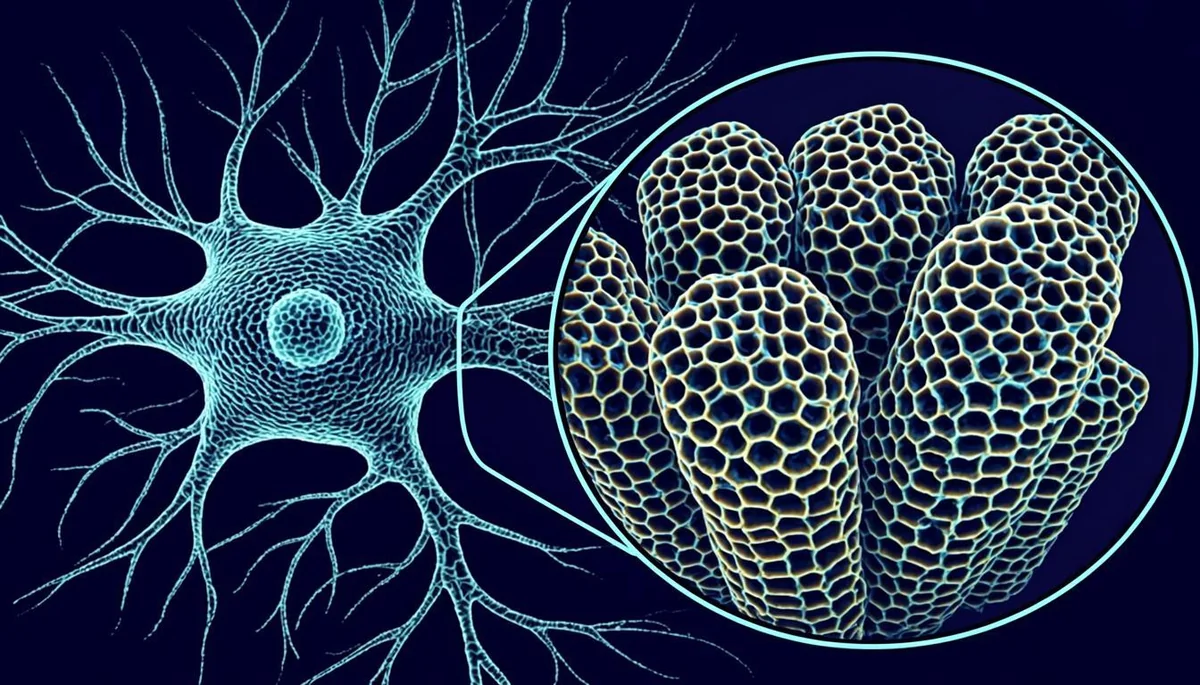
Fig. 2. Microtubules of a neuron — hollow cylinders of the protein tubulin that form the cytoskeleton of the cell. A hypothetical substrate of the quantum processes underlying consciousness.
In 2014 Hameroff's group irradiated microtubules in a test tube with a laser and discovered resonance at frequencies close to the gamma rhythm of the EEG (about 40 Hz). This is not proof that microtubules are consciousness, but it shows that they can be active resonators.
The Mystery of Anesthesia
The story with anesthetics is especially interesting. When a surgeon administers propofol, the patient loses consciousness — but the heart keeps beating and the neurons keep firing. Hameroff showed: many substances that switch off consciousness bind precisely to hydrophobic pockets in tubulin. They destroy the supposed quantum regime of microtubules, leaving classical synaptic processes intact.
If consciousness were simply a function of synapses — why do anesthetics switch it off without blocking synapses? This is one of the most intriguing puzzles in neuroscience.
How Orch OR Works
In the Orch OR model, gamma synchronization arises not through synapses but through the quantum states of tubulins in microtubules. When coherence reaches a threshold, an objective reduction of the wave function occurs. This moment, according to the hypothesis, creates the elementary act of consciousness, which then synchronizes neural networks.
Free will in this model looks like this: the brain holds variants in superposition, emotionally charged intention creates a vector, and the collapse selects the state amplified by that intention. This does not abolish determinism entirely, but introduces an element that goes beyond classical causality.
The Main Objection: Tegmark
In 2000 the physicist Max Tegmark calculated that quantum coherence in a warm, wet brain is destroyed in 10⁻¹³ seconds — too quickly for any neural processes.
Hameroff and Penrose reply: Tegmark considered isolated tubulins, not their ordered network in a real biological environment. Quantum coherence in plant photosynthesis (Engel et al., Nature 2007) has already shown that biology can protect quantum states in a "warm and wet" environment.
The question remains open.
The Alternative: IIT
There is also a non-quantum theory of integrated information (IIT) of Giulio Tononi and Christof Koch. It tries to explain consciousness through a measure of integrated information (Φ) — but does not explain why a high value of Φ should be accompanied by subjective experience.
An honest admission: today we have several incomplete explanations and no complete one. Classical neuroscience does not explain the nature of qualia. Orch OR tries, but faces serious physical objections. IIT describes conditions but does not explain the mechanism. I lean toward Orch OR precisely because it at least tries to answer the hardest question.
The Brain as a Filter
Evolution has most likely developed a powerful filter: the brain destroys "excess" coherence, producing a stable classical "interface" necessary for survival. If we constantly felt the full superposition of possible realities — we would be paralyzed. We see exactly as much reality as is needed to survive and reproduce. No more.
Meditation, psychedelics, and certain phases of sleep apparently weaken this filter temporarily. They do not open "true reality," but they shift the equilibrium point between the classical interface and the quantum foundation.
III. The Bayesian Paradox of Self-Optimization
Now — returning to the three portraits we began with.
The Structure of the Paradox
The more you measure yourself, the more you fit yourself to the measure. And the less the measure is able to see what you are.
This paradox is Bayesian in structure. In Bayesian inference, prior beliefs (the prior) determine how you interpret new data. You start with a hypothesis: "my productivity is X." Measurements confirm it. You adjust the dose. Measurements confirm again. The circle closes.
After a year you have no data on who you could have been without this system of measurement. Because you never tested that hypothesis.
The Quantum Layer of the Paradox
Every act of optimization is a collapse of the wave function into a pre-chosen branch. You choose the state with the maximum predictable payoff and thereby cut off all alternative trajectories. If you make a decision based on a tracker — you collapse the wave function of your day into a single point from a spectrum of possibilities.
But reality is a spectrum. A life lived as a function is a life in which all alternatives have been killed before they had time to manifest.
In quantum mechanics this is called "phase locking": measuring one quantity erases information about the conjugate one. If you measure your productivity too precisely — you lose access to meaning.
The Paradox of Fading Qualia
When you replace the feeling of wakefulness with numbers — you do not lose wakefulness. You lose the ability to feel it.
Qualia, the subjective taste of experience, feeds on uncertainty. Complete certainty — as in Borges' library, where the location of every book is known — makes the very sensation of the book unnecessary. And so with you: complete biometric certainty makes the very sensation of you unnecessary.
You become a function that has no one to perform it.
We optimize ourselves in order to live better. And as a result — we cease to be the one for whom "better" has meaning. This is not a lyrical digression. It is a structural problem.
IV. What to Do With This: Five Practices
The utilitarian reader will ask: "So what do I do with this information? What is the practical consequence?"
I answer: none — in the sense you are used to. This is not an instrument, not a device, not a pill. It is an optics. It changes not what you do, but how you do it. You can keep taking nootropics — knowing that you are not a function but a node. You can keep measuring glucose — but measuring it knowing that you are not 47 parameters but the one who sees them.
We need zones of uncertainty — literally: areas of life in which you do not measure, do not control, do not optimize. Not because it is "good for mental health" (though for that reason too). But because it restores the width of the wave function.
1. Look at Everyday Life as an Interface
Morning coffee, traffic lights, a message on the phone — these are not events but pixels on a screen behind which a much more complex mechanism works. This is not a cause for anxiety. It is a cause for quiet curiosity.
2. One Day a Week Without Biometric Self-Monitoring
Not forever — for one day. Wake up without looking at Oura. Do not check Whoop. Go through the day without knowing your heart rate variability. I do not call this treatment. I call it the restoration of the minimum uncertainty in which qualia can manifest.
3. Ten Minutes of Silence
Without a meditation app. Without guides. Without a goal. Sit and breathe. If a thought comes — observe it. If none comes — observe the absence. This is precisely the "node open to correlation": you do nothing, but something is done through you.
4. One Walk a Week Without a Phone
Not for health — for unstructured perception. A city without a map. A forest without a tracker. A walk with no metric, no goal, no result. I know this sounds like a waste of time.
5. If You Take Pills — Keep Taking Them
This is not an excuse to dismiss the text. It is respect for your particular biology. But take them with the clear knowledge: you are not the function they optimize. You are that for which optimization is merely one of the states.
V. Ocean and Drop
Returning to the beginning.
The drop does not know it is the ocean. But the ocean knows it is the drop. Here is the whole asymmetry of experience: you feel small because you are localized. And localization is precisely the means by which the whole comes to know itself as a part. Without your localization, this knowledge would not have happened.
When you restore uncertainty to yourself, you restore to the Universe the ability to manifest through you.
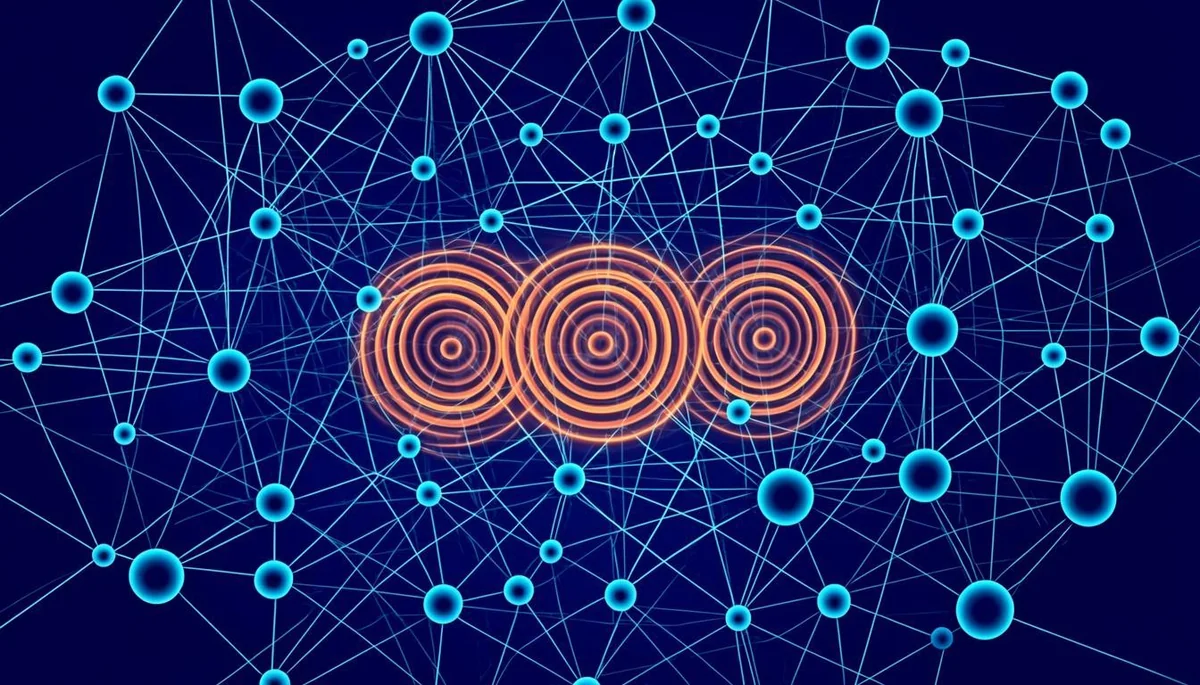
Fig. 3. Open and closed nodes in a network of correlations. A closed node reflects the wave; an open one lets it pass further. To be alive is to be an open node.
You are a node in a quantum network through which correlation passes. If the node is locked at one point — correlation does not pass through it, it reflects and goes another way. If the node is open — correlation passes through, and you become that through which the Universe sees itself.
This sounds mystical, but it has a precise physical meaning. An open system exchanges information with its environment. A closed one does not. In the quantum world, "openness" is literally the ability to interact. To be alive means to be an open node in a network of correlations.
Out of quintillions of nodes in the Universe, you are one of those that are self-aware. This is not a flattering metaphor. It is a structural fact. Hydrogen atoms in the Universe — on the order of 10⁸⁰. Stellar systems — on the order of 10²². Of those, planets suitable for life — possibly 10²⁰. Of those that developed complex life we do not know, but by conservative estimates, no less than one. Of all possible configurations of matter, you are the one that can ask a question about itself.
Not because it makes you the center of the Universe. It does not. But it makes you a point at which the Universe becomes conscious. Without you this point would be absent. With you — it is. This is what I call "making the Universe alive."
The Universe does not need you in the sense in which it needs air or gravity. But in the sense in which consciousness needs a point from which it looks — it needs you completely.
Not the most important node. Not the most central. But not redundant either. A node without which the network would be different.
Key Sources
- Penrose R. The Emperor's New Mind. Oxford University Press, 1989 — argument from Gödel's theorem
- Hameroff S., Penrose R. J. Conscious. Stud. 3, 36 (1996) — first presentation of Orch OR
- Babcock N. S. et al. Biosensors 4, 479 (2014) — microtubule resonance at gamma frequencies
- Hameroff S. et al. Biochim. Biophys. Acta (2018) — anesthetics and hydrophobic pockets of tubulin
- Singer W. Neuron 24, 49 (1999) — review of gamma synchronization
- Engel G. S. et al. Nature 446, 782 (2007) — quantum coherence in photosynthesis
- Tegmark M. Phys. Rev. E 61, 4194 (2000) — calculation of decoherence in the brain
- Tononi G. BMC Neurosci. 5, 42 (2004) — integrated information theory (IIT)
- Koch C. The Feeling of Life Itself. MIT Press, 2019 — exposition of IIT
- Chalmers D. The Conscious Mind. Oxford University Press, 1996 — the hard problem of consciousness
- Brewer J. A. et al. PNAS 108, 20254 (2011) — meditation reduces default-mode network activity
- Penrose R. Shadows of the Mind. Oxford University Press, 1994
- Rovelli C. The Order of Time. Riverhead, 2018
- Hofstadter D. I Am a Strange Loop. Basic Books, 2007